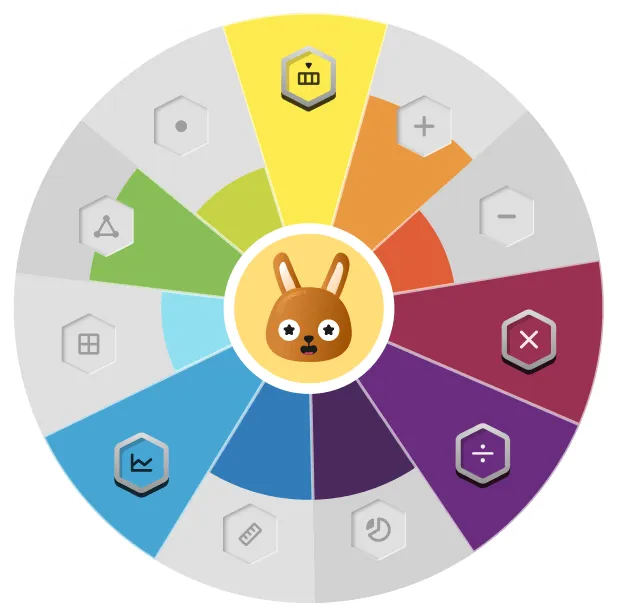
ALEKS is a digital learning tool that uses machine learning to create adaptive learning paths for students. McGraw-Hill engaged our team in a series of programs to develop a new version of ALEKS for grades K-3 that would re-imagine the early elementary education experience through the lens of immersive, adventure-themed math lessons.
McGraw-Hill came to frog with the goal of launching a new math product for early elementary students. Their current ALEKS program is used extensively in middle and high schools, but the presentation of the existing content is dry, uninspiring, and too complex for younger students.
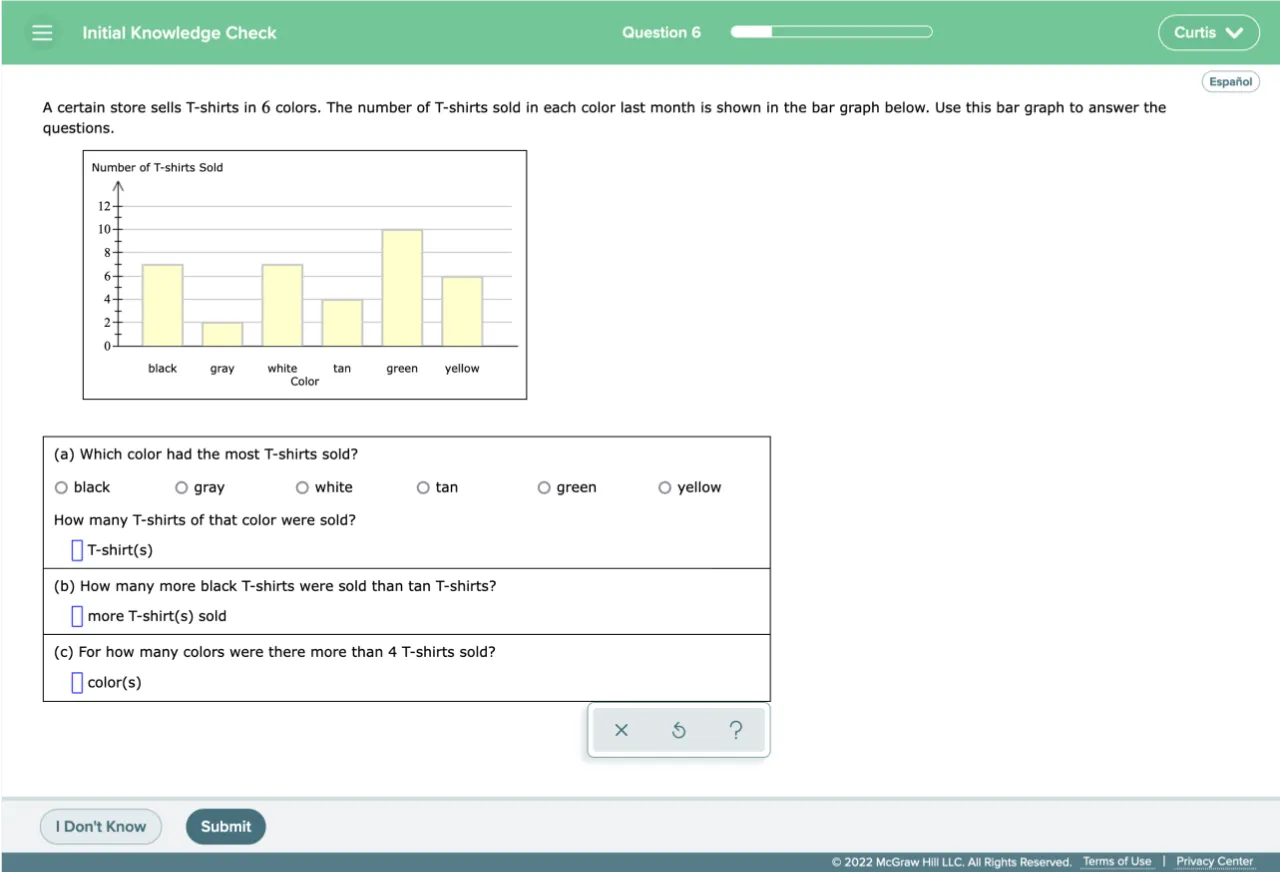
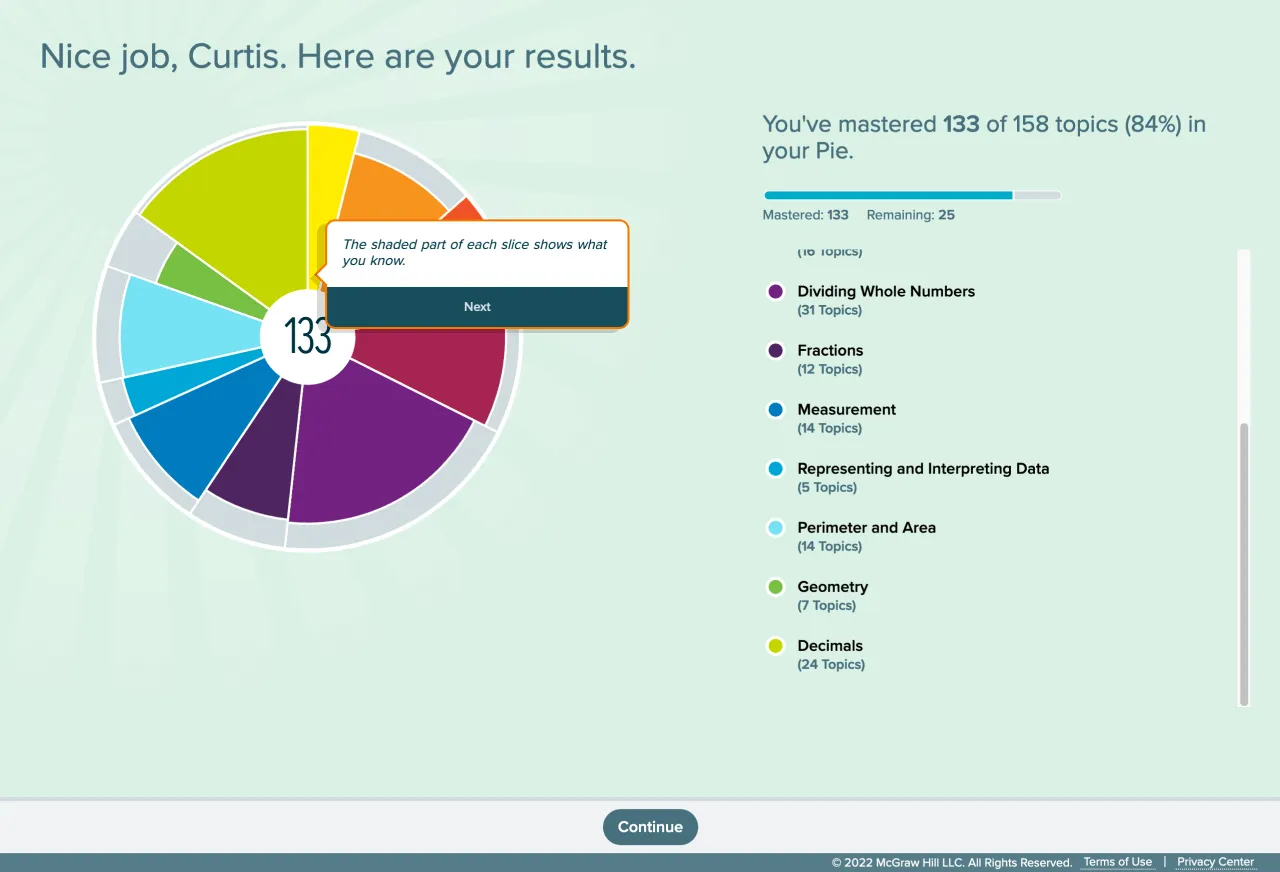
The existing ALEKS content was too dry, complex, and uninspiring for younger students.
We needed to take a different approach in designing a digital product for younger students. Our first task was to help McGraw-Hill understand the unique needs and motivations of younger students. Then to translate the company's proven instructional philosophy into a compelling, engaging, and scalable digital experience.
Building a digital experience for grades K-3 was uncharted territory for the ALEKS team. To address these gaps, our team interviewed academic experts and classroom teachers to discover relevant guidelines, pain points, and opportunities areas in designing for this audience.

Many math materials are too conceptual for our target age group. Relatable content is key.

Young students have short attention spans and require variety to stay engaged.

Teacher have unique workflows and curriculum demands. They crave an adaptable set of tools.

Student tastes and abilities evolve rapidly from K-3, but all kids love stories and characters.

Over the course of 11 months, we brought to life an ambitious, adventure-themed design concept and supported the ALEKS team’s path to development through detailed flows and prototypes for key parts of the product.
Along the way, we created high-fidelity lesson prototypes in collaboration with McGraw-Hill content experts, explored new gaming and social features to deepen the immersive experience, and validated our designs through in-field user testing with teachers and students.
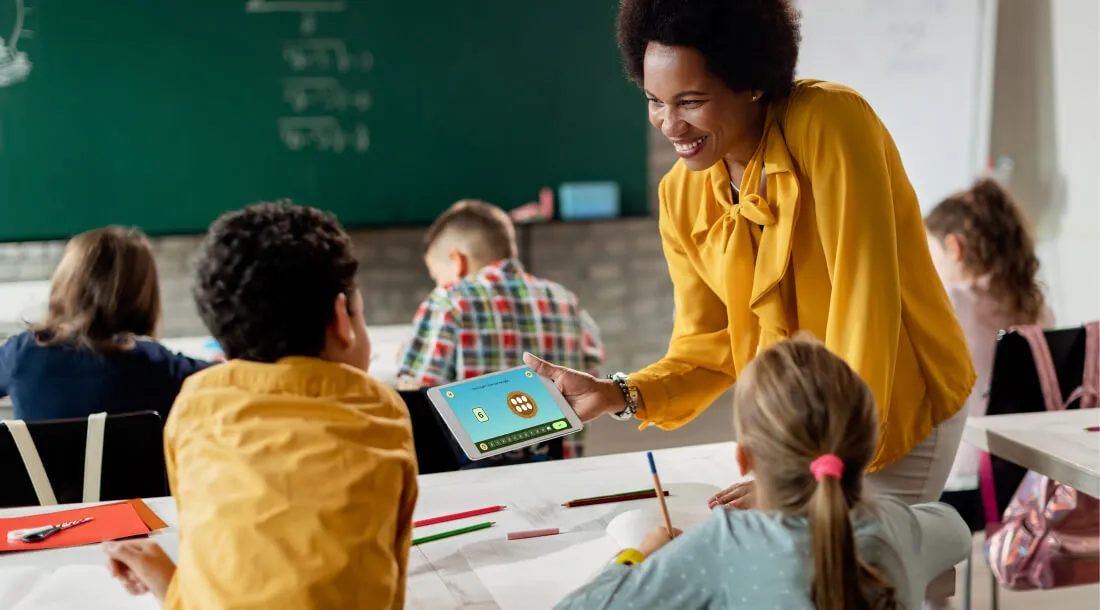
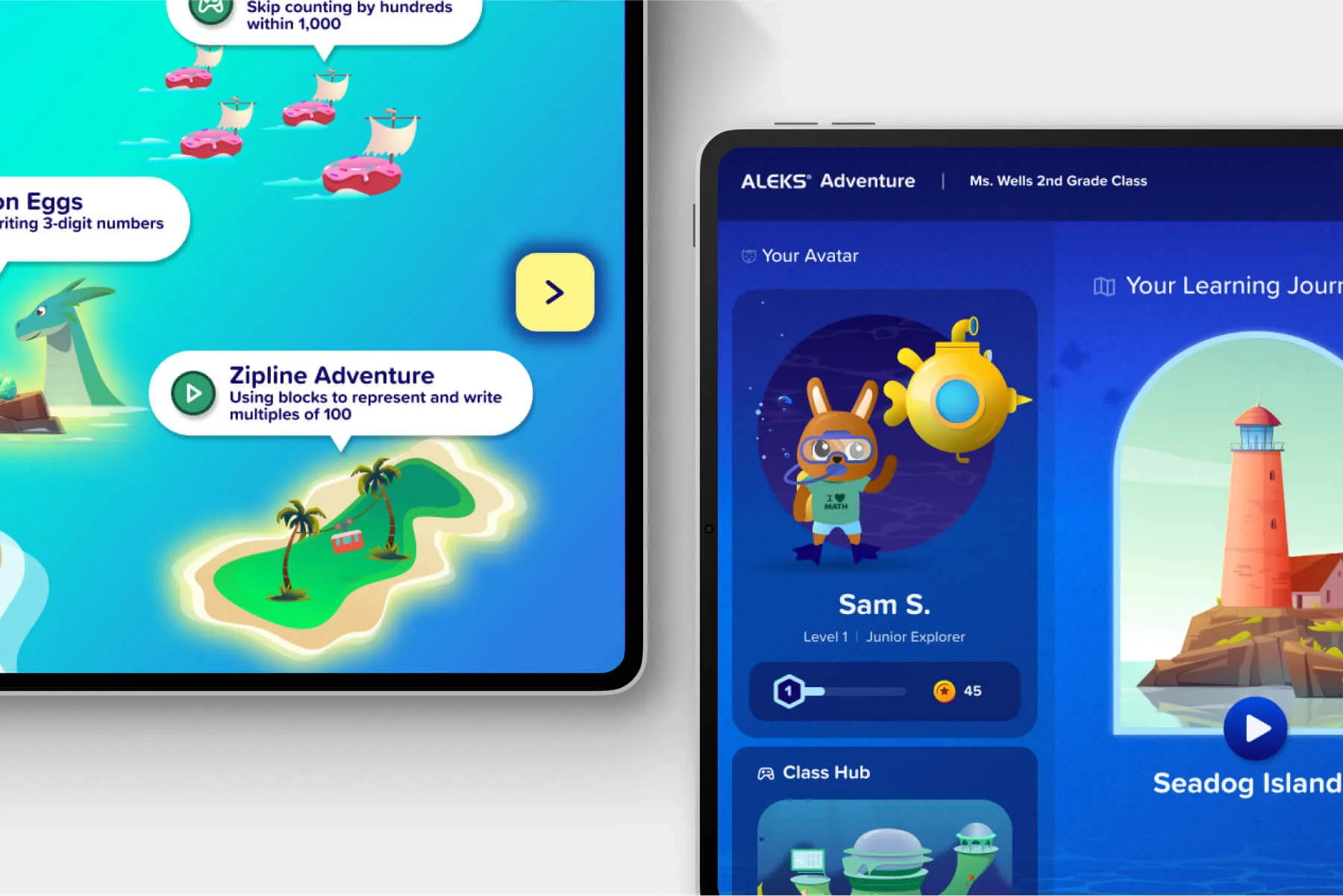
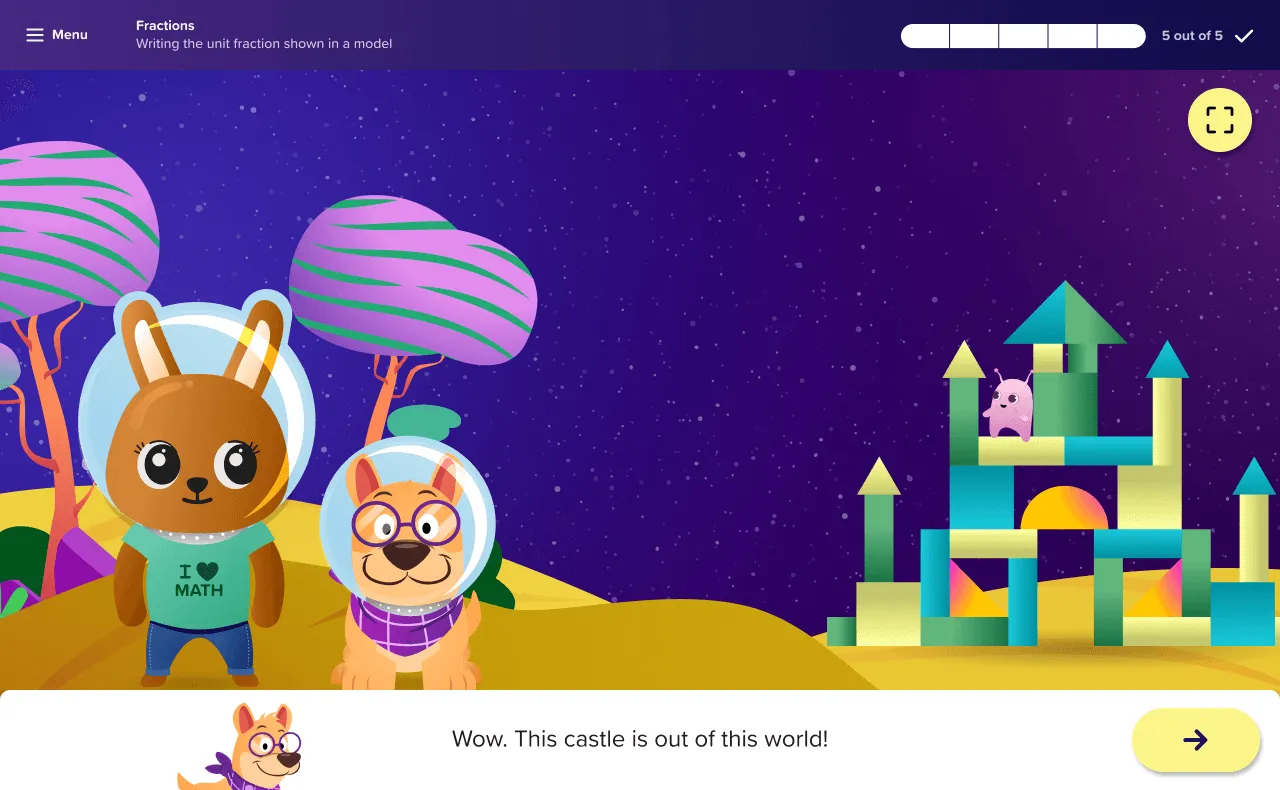
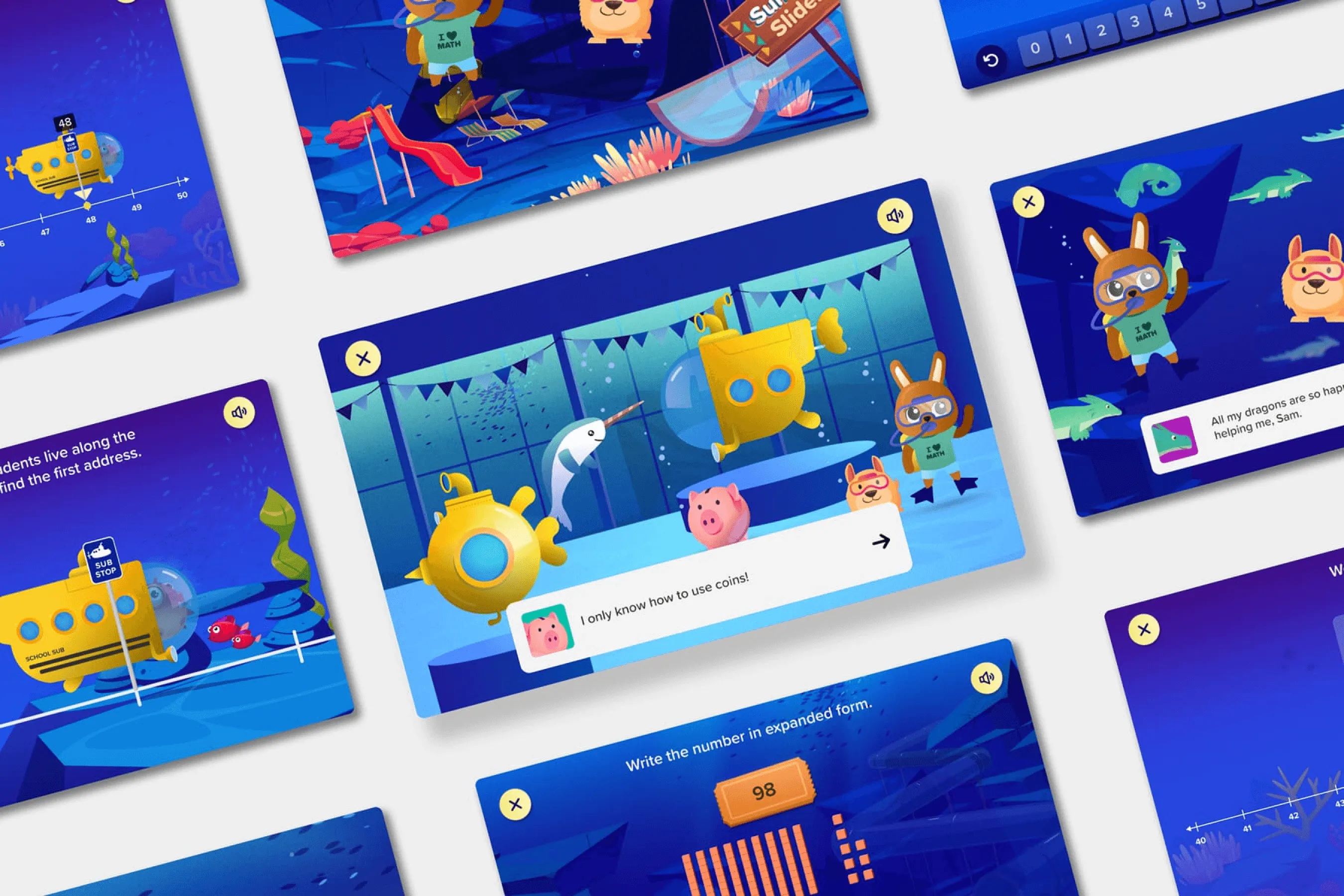
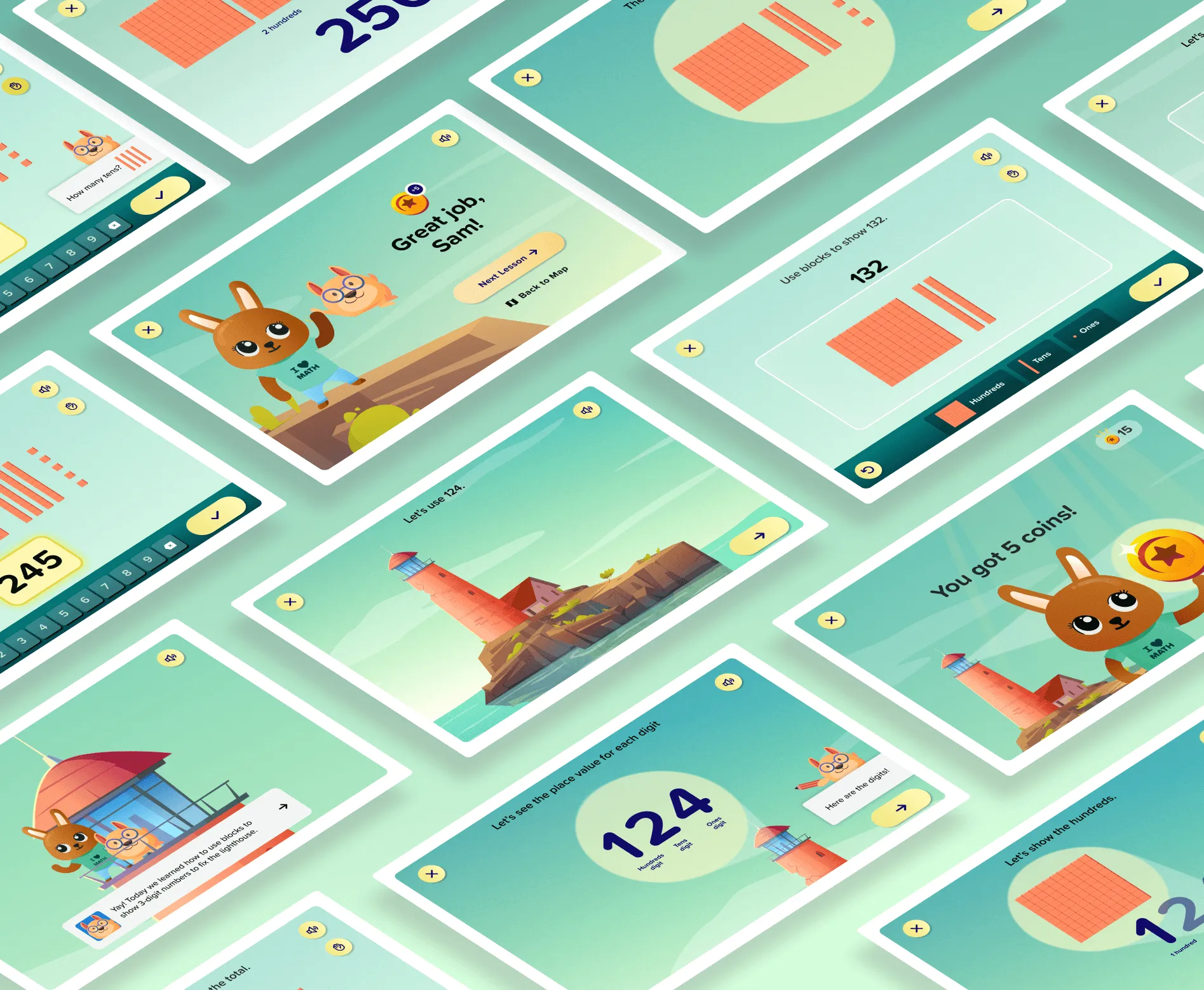
Math lessons are delivered through the lens of relatable, immersive narratives that put students at the center of the action. Playful, recurring characters engage the students and create an emotional appeal.
Throughout the year, students unlock new worlds as they learn math concepts, fueling their curiosity and visually showcasing their progress.
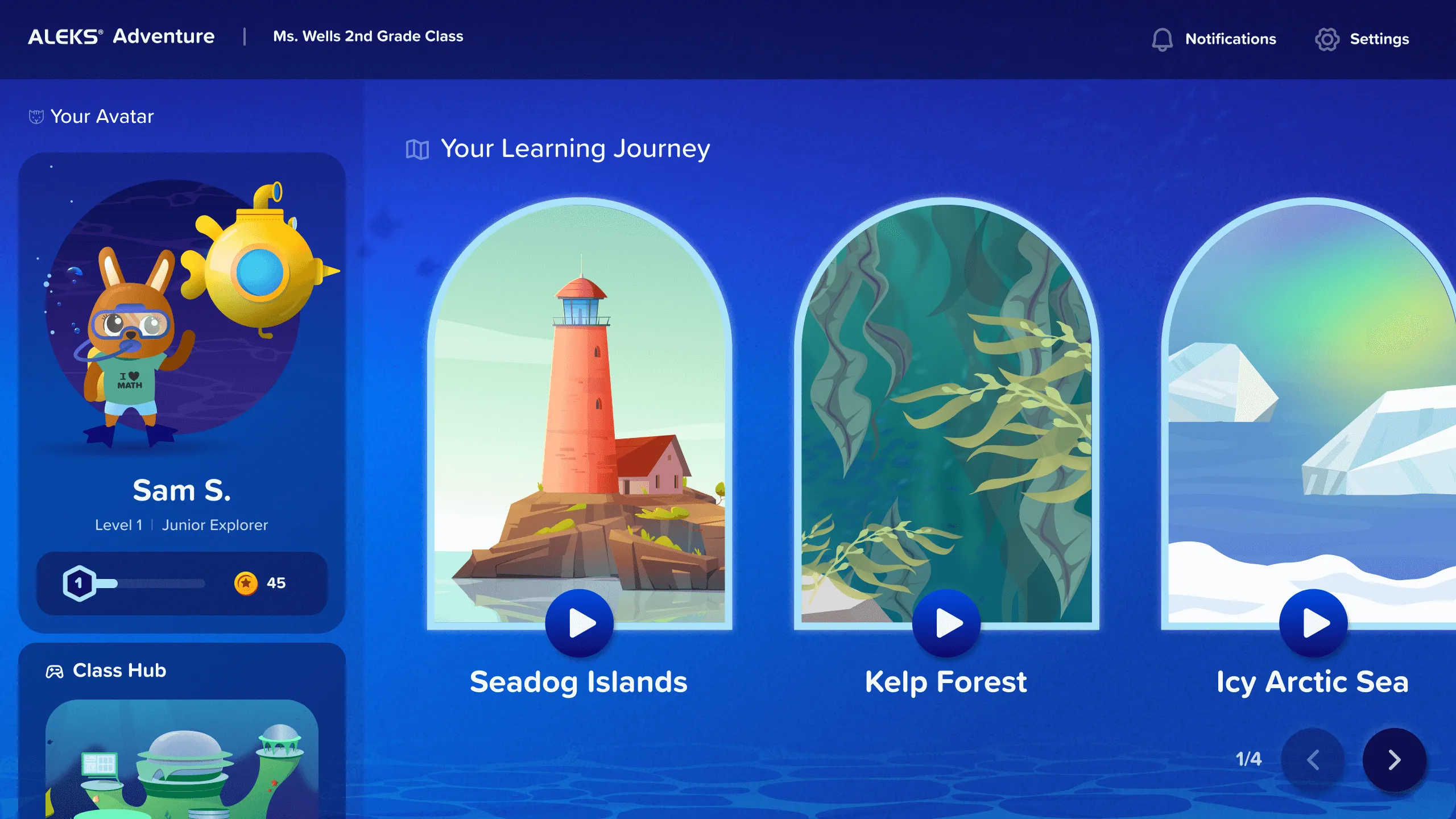
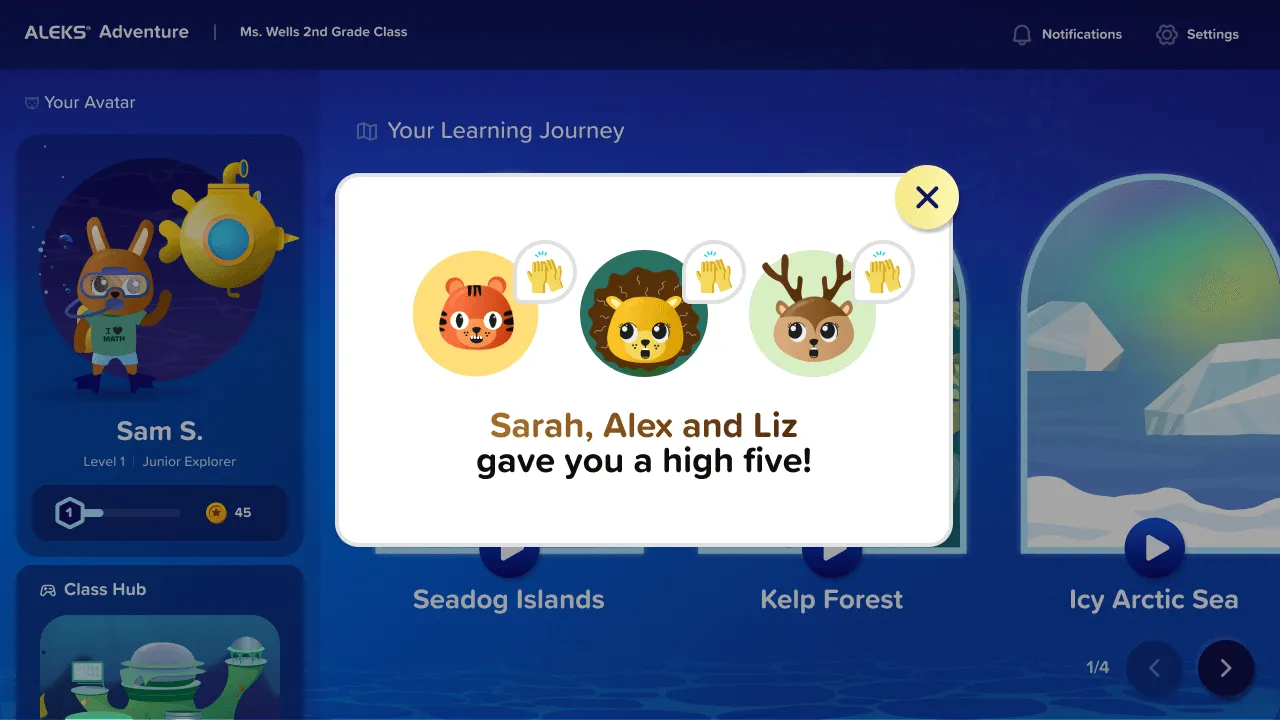
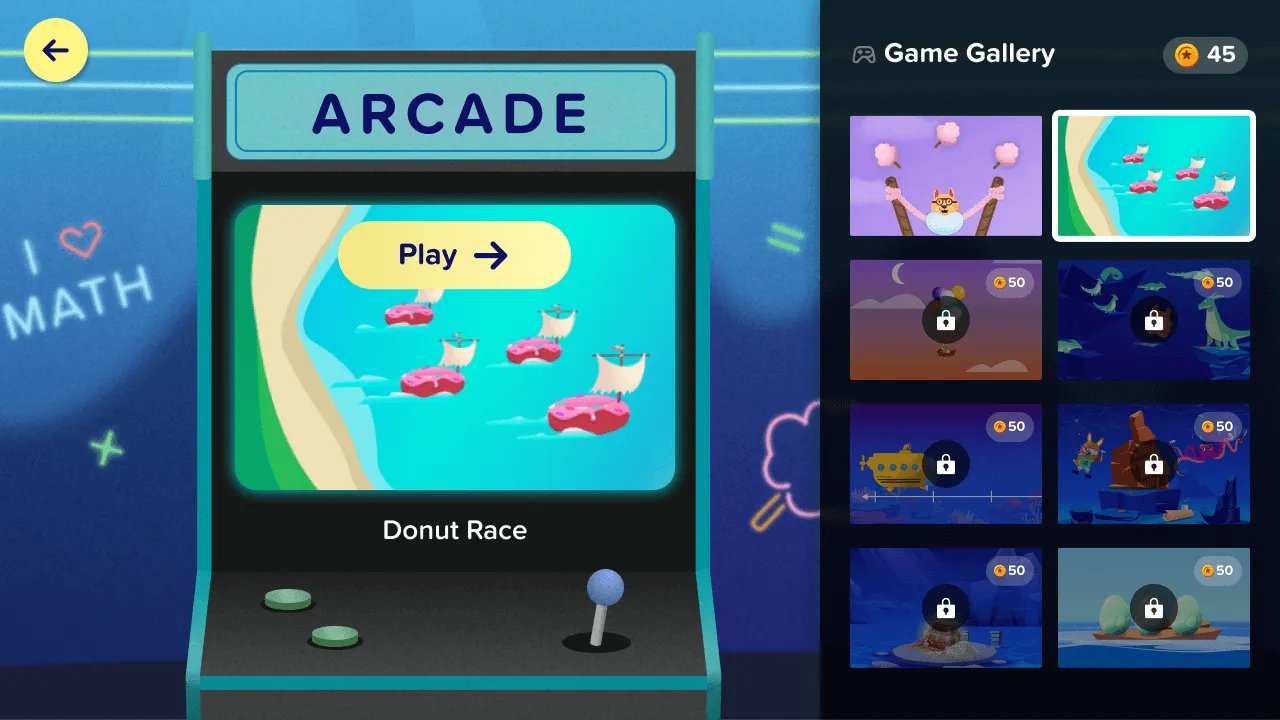
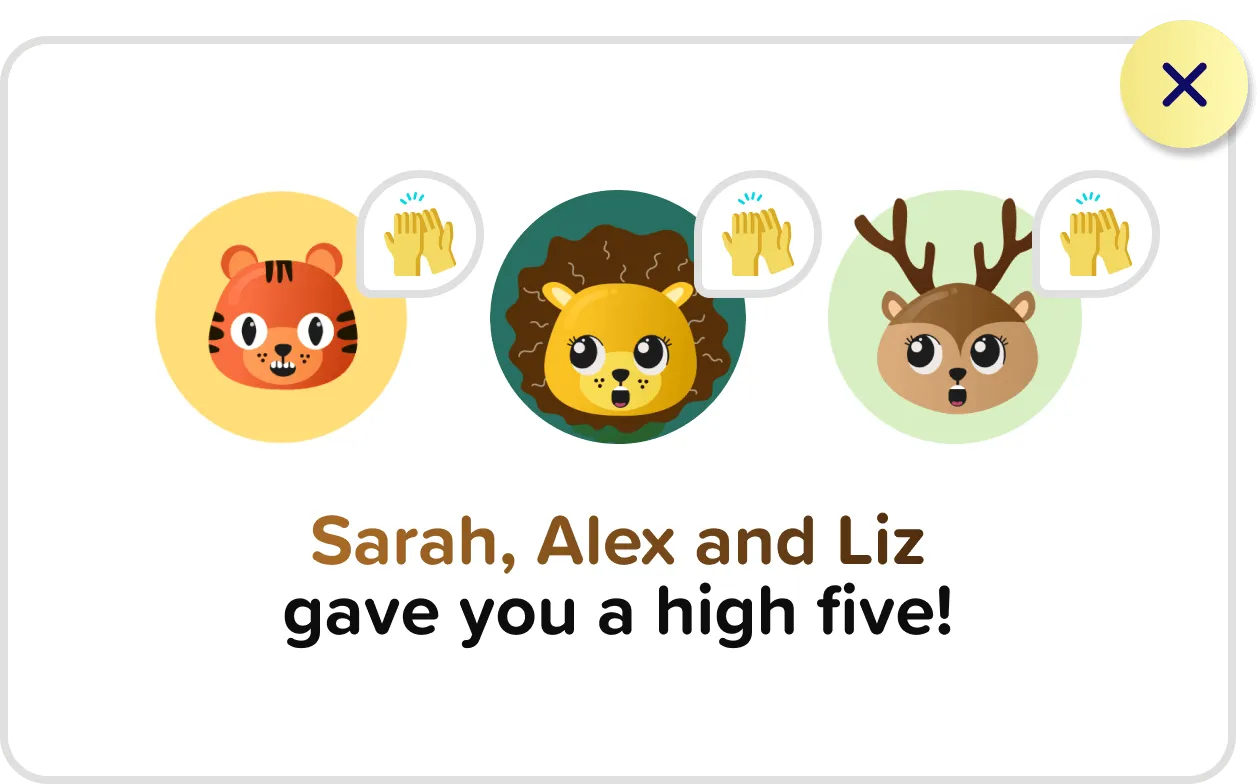
Students earn coins through completing lessons that they can spend in various ways, from playing games to customizing their avatar to upgrading their ship. They can also share their progress with their classmates. The diverse options and freedom of choice in selecting rewards is a way to encourage self-expression and keep the experience fresh throughout the year.
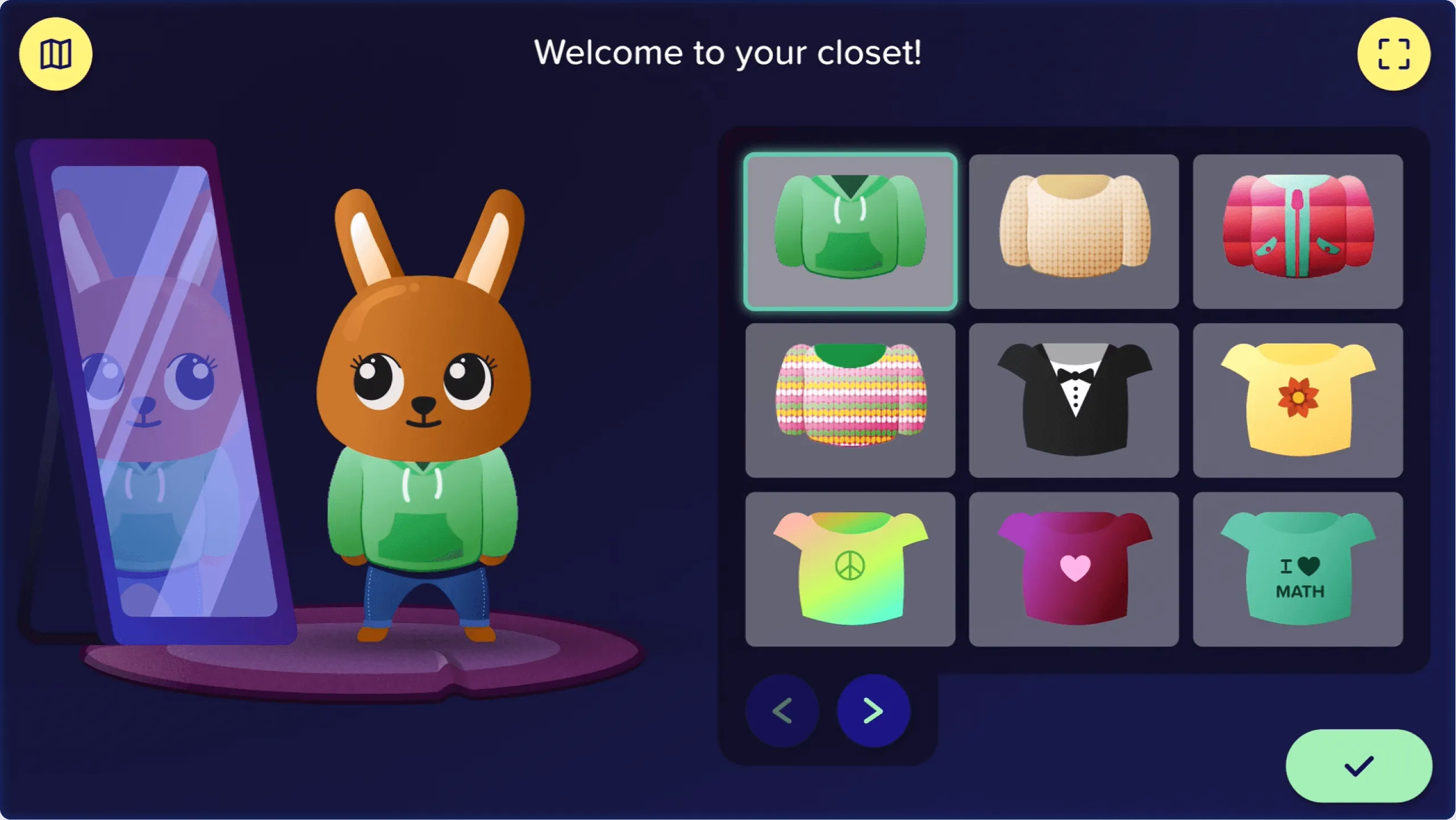
A core tenet of the McGraw-Hill and ALEKS approach to education is that students should develop rigor, or a level of tenacity and stick-to-itiveness, throughout their learning journey. This ethos was echoed in our interviews with classroom teachers and learning experts.
Our approach to in-lesson support reflects that desire to build resilience while supporting learners of all types. The solution was to design a hint gradient, which progressively increases the level of support, to guide students towards correct answers without giving them an easy way to avoid the positive stress that inspires learning.
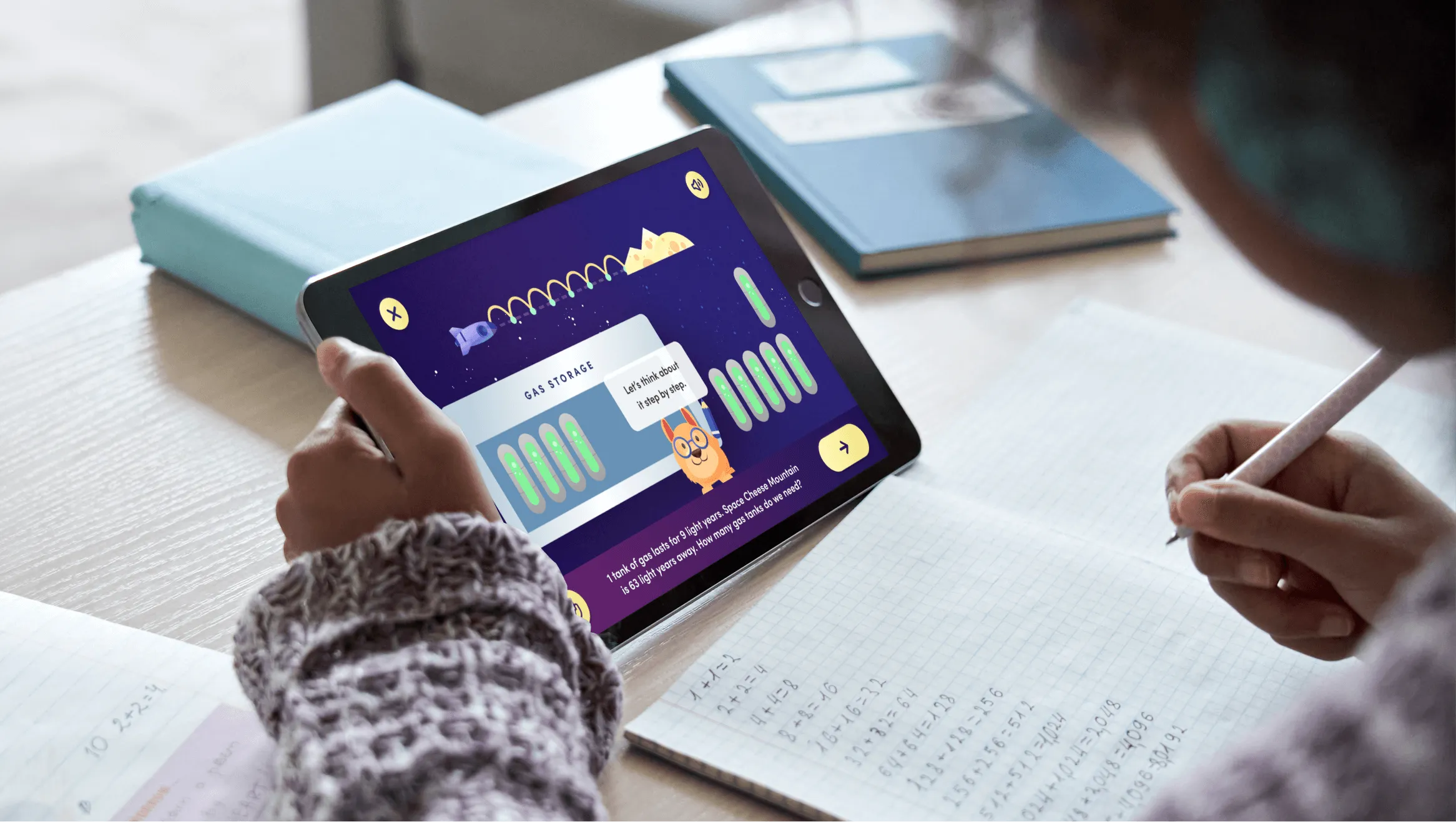
Games allow students to apply math concepts they learn during lessons in a fun and interactive way, helping to reinforce their understanding and build confidence. Including games in the experience offers students another way to feel rewarded for their efforts. It is also a proven method for internalizing the concepts learned during initial instruction.
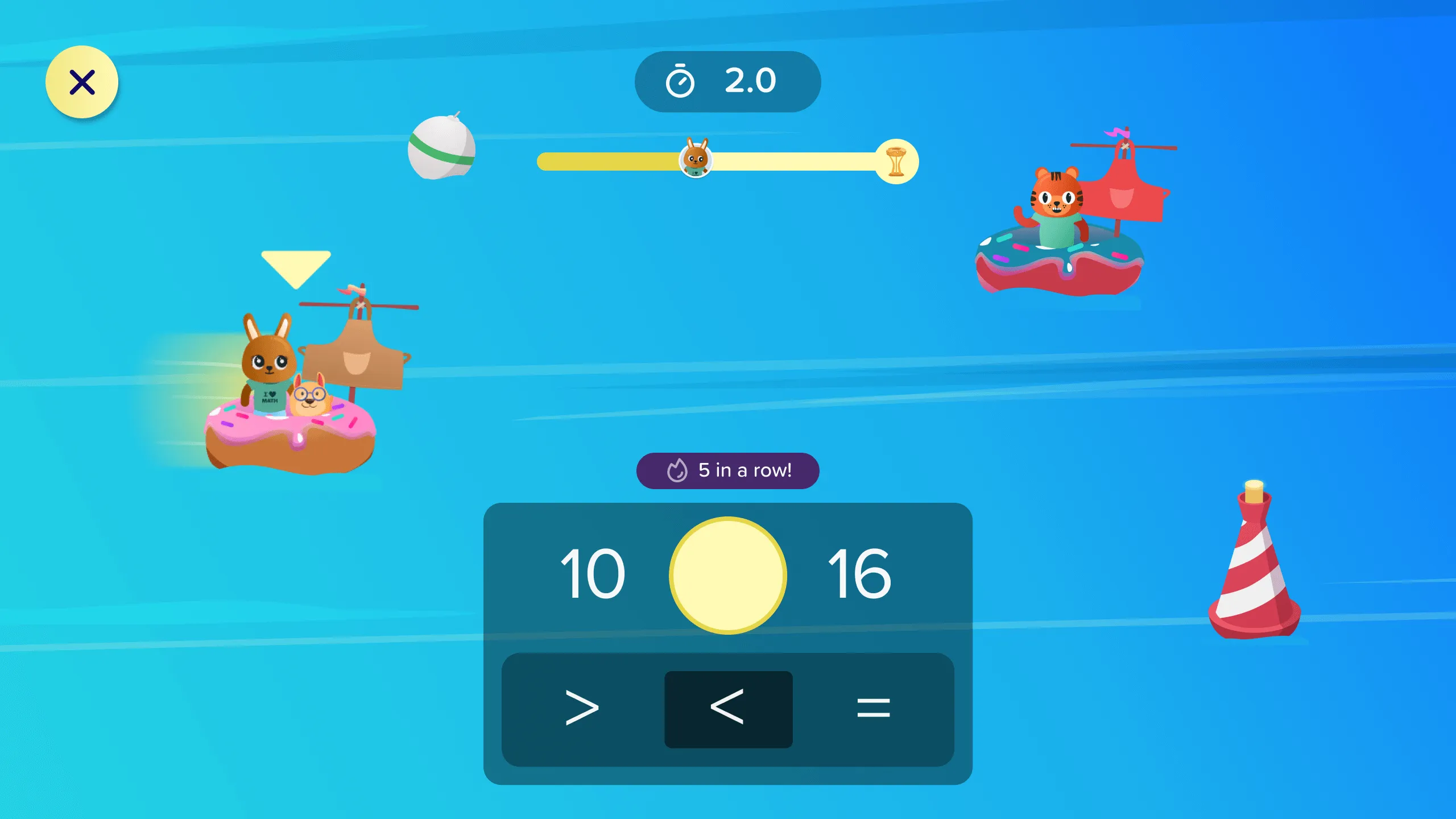
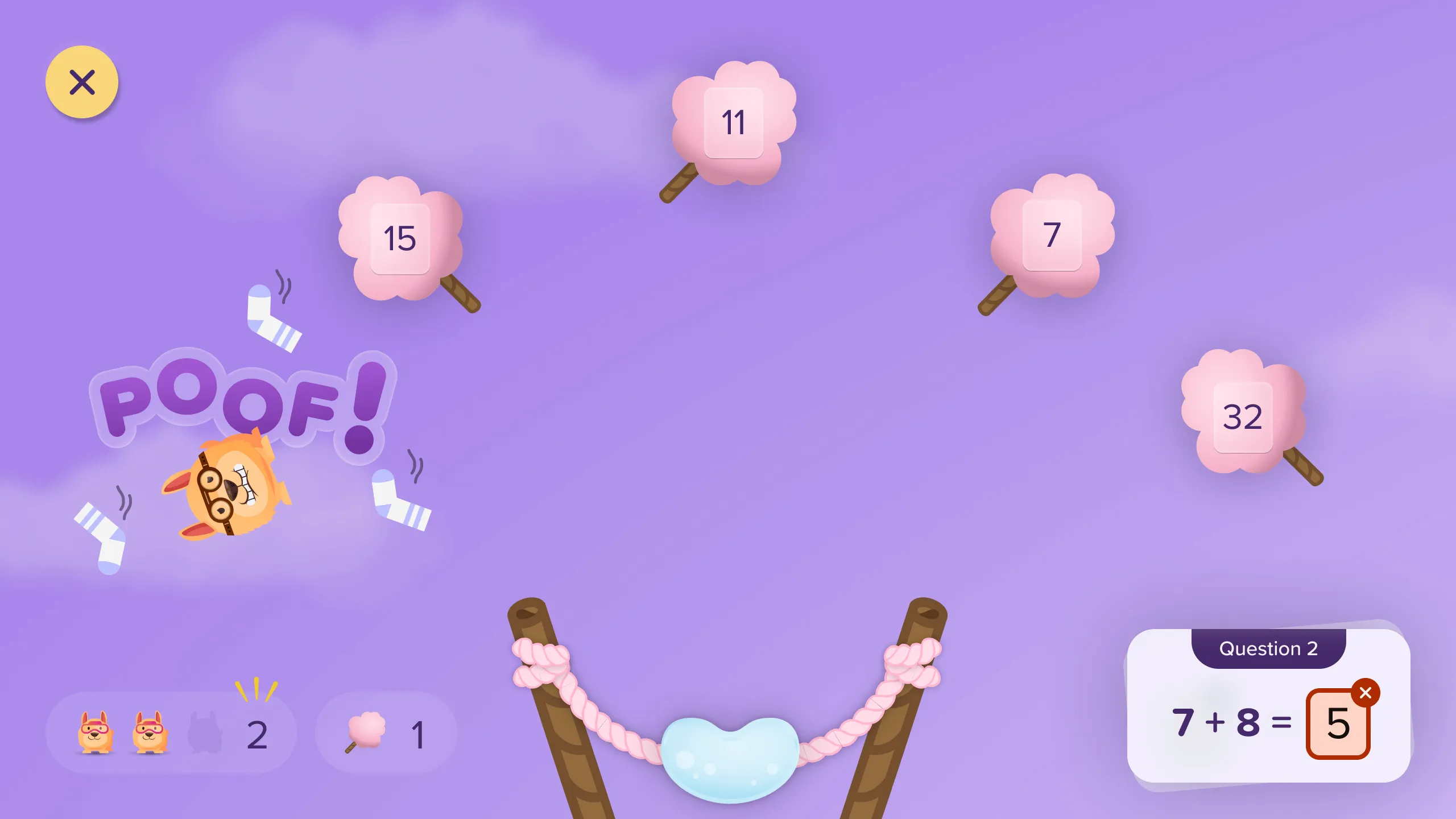
Game Type #1: Math Fact Fluency Games
Short, simple games designed to reinforce fluency around a single math topic.
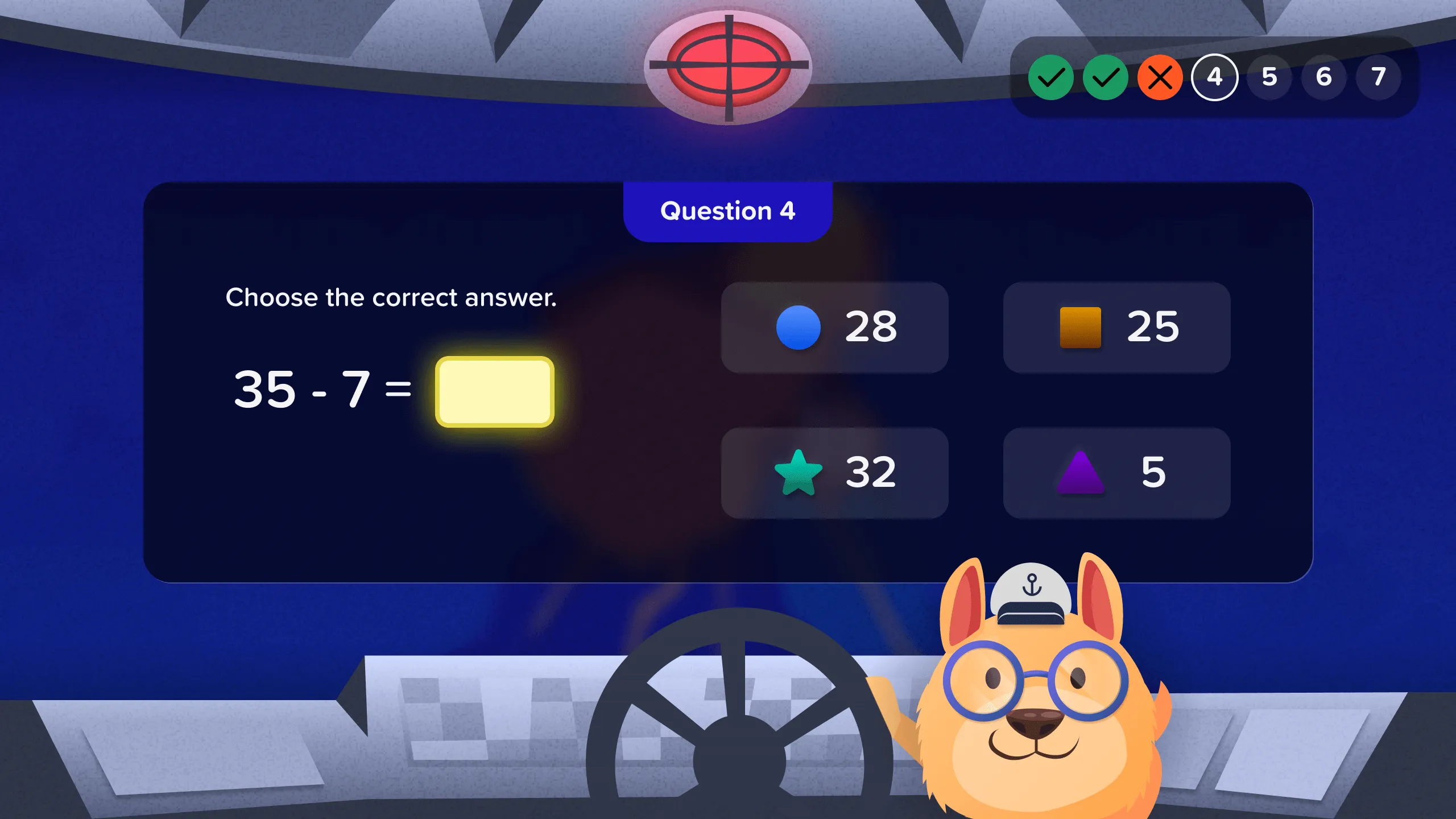
Game Type #2: All-class Games
Multiplayer games run by the teacher, which allow for teamwork and collaboration between students, with or without their devices.
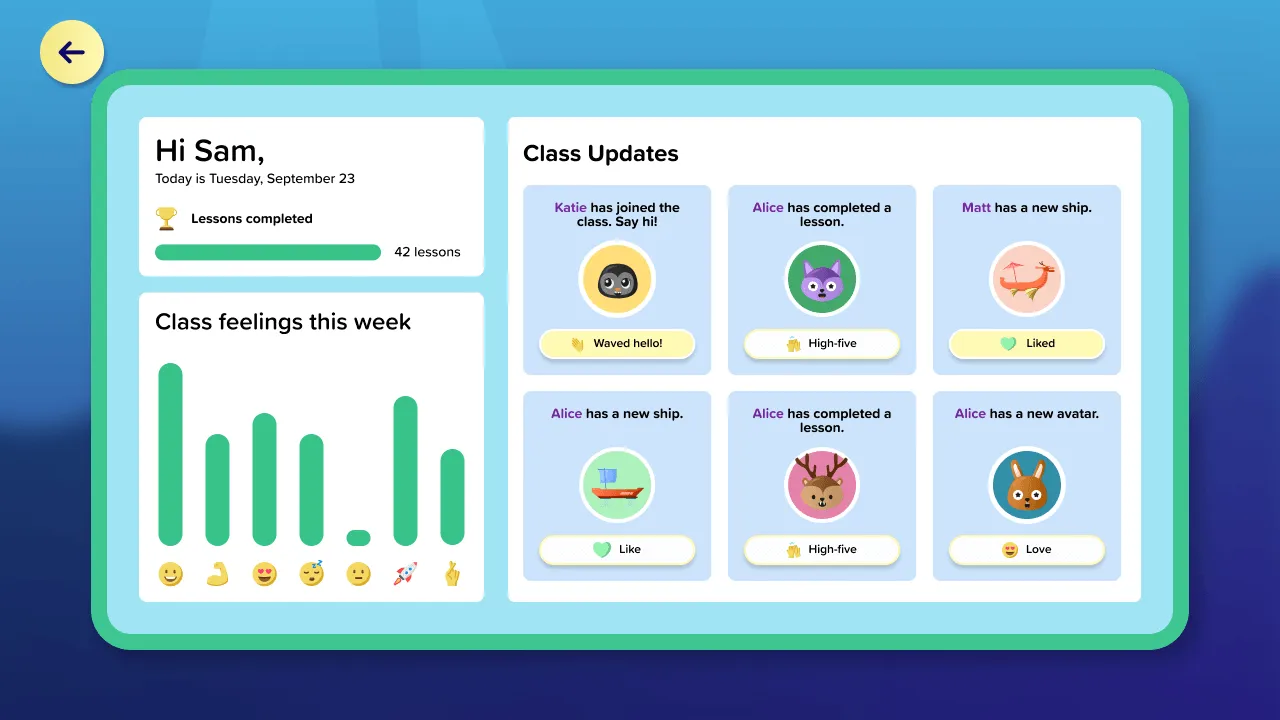
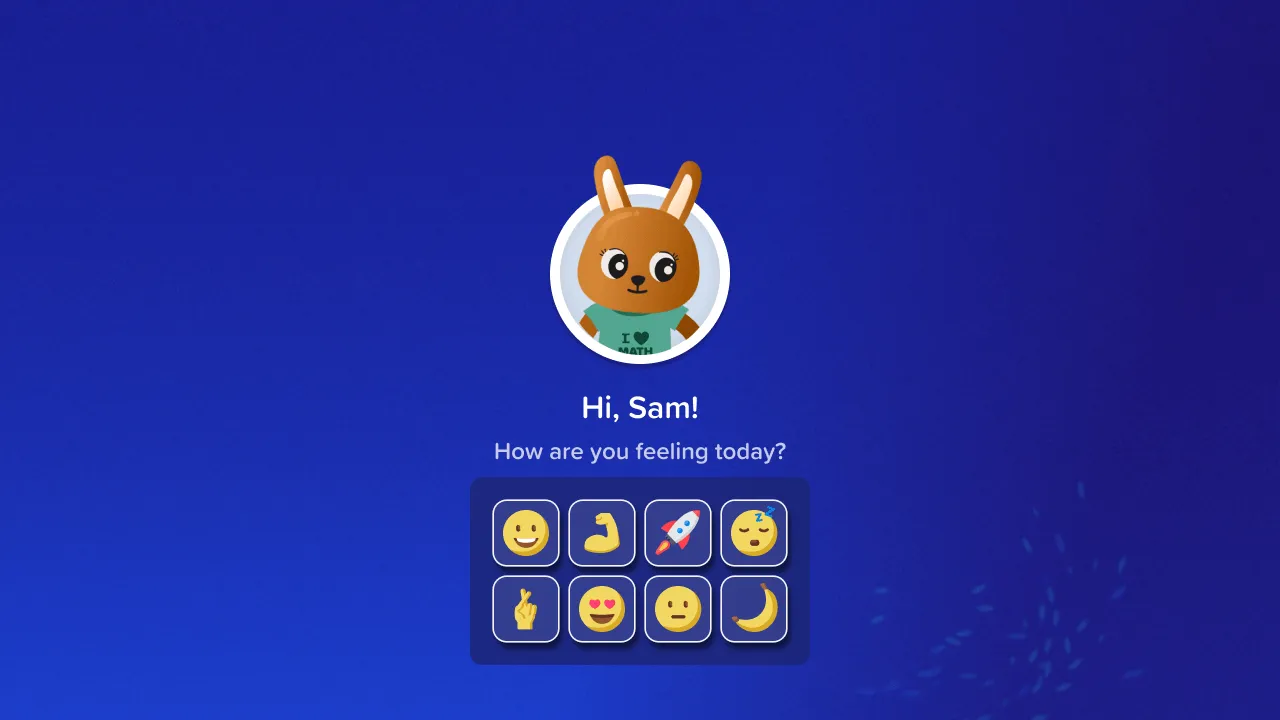
The social features addressed the teacher's desire for their digital tools to enhance the in-class community that they are seeking to build. For the students, the features served as motivational levers to encourage self-expression, mutual support, and a desire to complete more lessons.
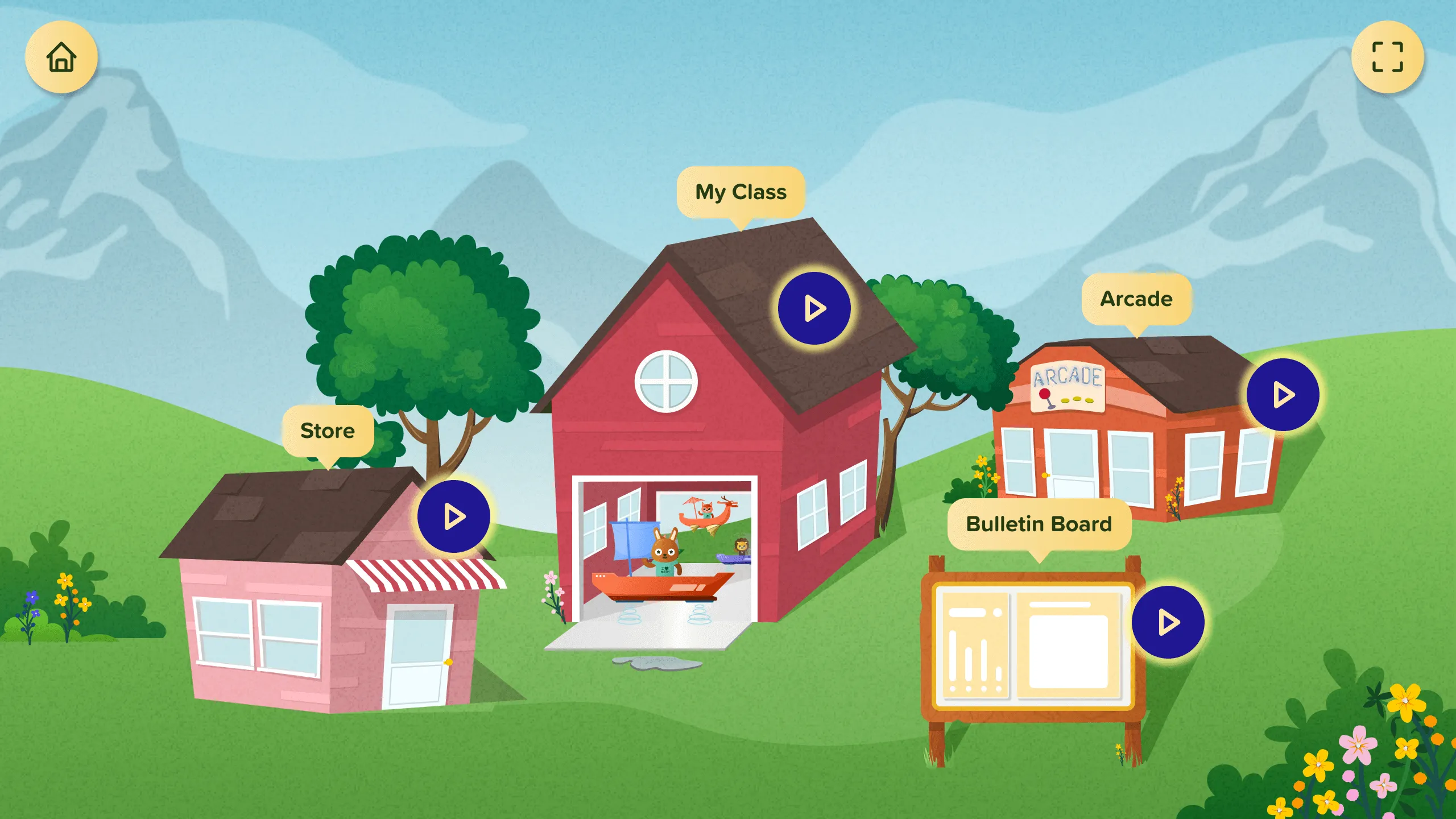
Class Hubs are special maps where students can access their favorite social and gaming activities. Each year, the appearance of the hub changes to match the grade theme.